
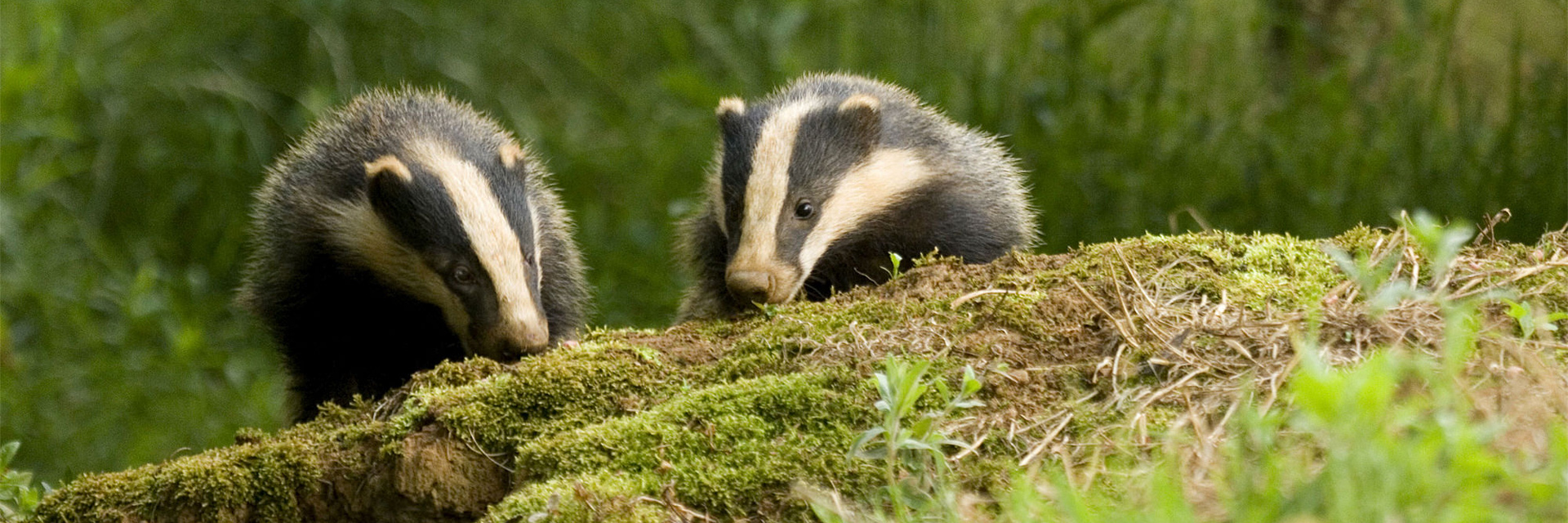
Badgers and bovine TB
The Wildlife Trusts have opposed the badger cull since it first started and no Wildlife Trust will allow badger culling on its land.
What is bovine tuberculosis?
Bovine tuberculosis (bTB) is a highly infectious disease of cattle, which devastates thousands of farming businesses annually. Since the mid-1980s, the incidence of bovine tuberculosis in cattle has increased substantially, creating an economic burden on the taxpayer and the farming industry, as infected cattle must be culled.
UK Government research shows that tuberculosis is not a major cause of death in Badgers. Generally, infected Badgers do not show any sign of infection and can survive for many years before suffering from severe emaciation.
What do The Wildlife Trusts believe?
We are very conscious of the hardship that bovine tuberculosis (bTB) causes in the farming community and the need to find the right mechanisms to control the disease. However, we believe that a Badger cull is not the answer. The scientific evidence demonstrates that culling is likely to be ineffective in fighting the disease and, worse still, risks making the problem even worse. We believe the emphasis of all our efforts should be to find a long-term solution and we call for the UK Government to implement its manifesto commitment to end the culling of Badgers.
This is a cattle problem, not a Badger problem
Evidence shows that Badgers are not the primary cause of the spread of tuberculosis in cattle and that the primary route of infection is from cow-to-cow contact – so a vaccine for cattle should be a government priority.
The cull is scientifically unsound
Robust evidence is still lacking to demonstrate that Badger culling is worth the loss of thousands of Badgers and millions of pounds of public spending. To justify the Badger cull and to try and show that Badger culling is having a significant impact on lowering bovine TB in cattle, the previous UK Government regularly used the Downs et al (2019) paper and, more recently, the Birch et al (2024) paper. Both papers however noted that they didn't or couldn't take account of confounding factors. The latter paper described one of these confounding factors, noting that the study farms involved in the Badger Control Policy were required to implement reasonable biosecurity measures. It went on to conclude that whilst it found a reduction in bovine TB on the study farms, the "vaccination of badgers, fertility control and on farm biosecurity may also achieve this effect".